

Riot Forge’s latest foray into publishing smaller spinoffs from indie teams resulted in Bandle Tale: A League Of Legends Story, which, on the surface, has everything I love about self-proclaimed cozy games: pretty pixel art, freeform objectives, and characters cute enough to trigger primal cheek-smashing instincts. But despite looking like an SNES classic and playing like a cross between Animal Crossing and Stardew Valley, Bandle Tale unfortunately ties itself up in knots with an overly tedious development process that had me rubbing my temples to keep from bursting into flames.
Bandle Tale tells the story of the ever-popular MOBA race of fluffy, hamster-like people, the Yordles, though you don’t really need any prior knowledge of League Of Legends to jump right in. All you need to know is that the Yordles live on the Sky Islands and love to party, but one day a glitch destroys the network of portals connecting each of the floating archipelagos.
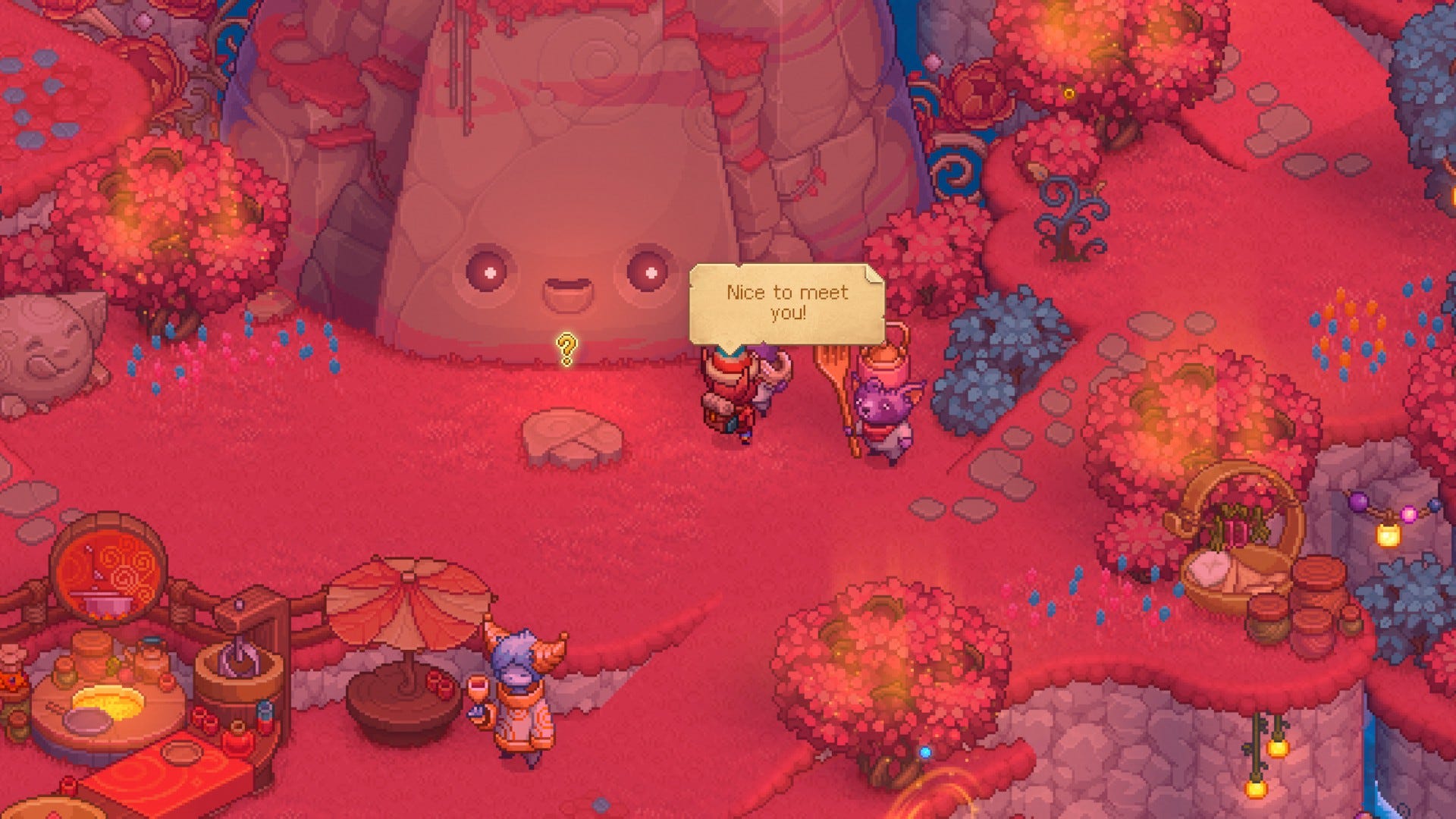
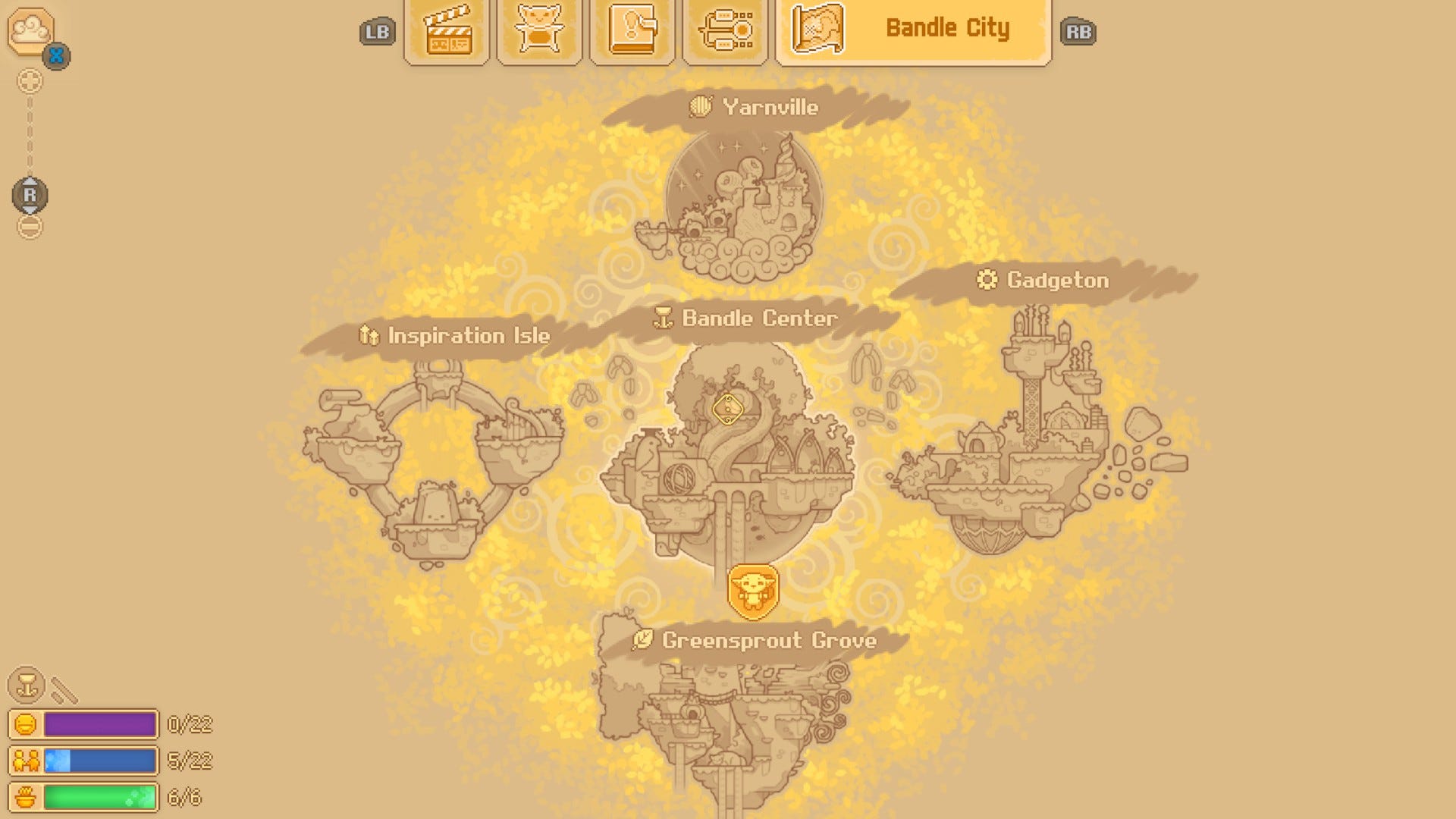
How do you fix such a devastating glitch? More parties! You create your own hamster hero before flying off to each sky island to complete tasks, make novel friends, and then invite those friends over for a gigantic reunion. The combined magical power of the entire hamster population, collectively spinning on the dance floor and drinking what I assume is non-alcoholic punch, is supposed to fix portals. Or something like that. So off you go!
Bandle City describes itself as a “crafting RPG,” meaning you’re mostly hunting down resources to then build other resources, tools, and your favorite farming game items (workbenches, furnaces, seed beds, etc.). Unlike similar games, you’re also not confined to a single stationary home. Instead, in Bandle Tale you carry around a backpack-like home that can be unzipped to specific locations.
I love the idea of a portable home base, especially in a game that requires so much travel back and forth. Despite its portable nature, your home here is as versatile and broad as you might expect. What initially starts as a one-room studio apartment eventually becomes a multi-room bachelor pad, complete with a greenhouse and customization options for walls, floors, bed frames, and window panels.
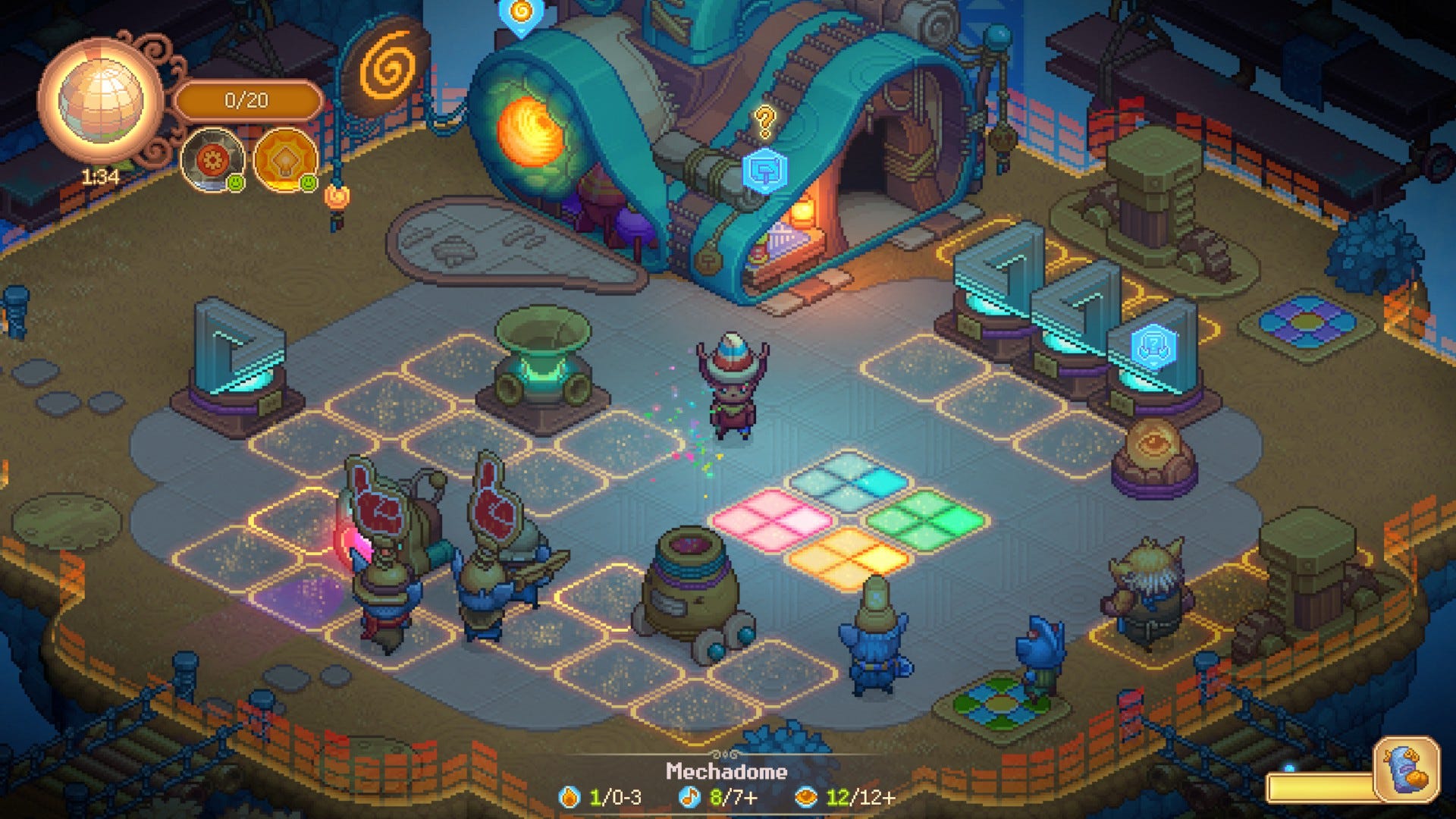
You can also spread out various rugs outside, revealing a fully-stocked food stand or space for the festivals you’ll be hosting during your adventure. Planning these gatherings is always fun, because with festivals, you’ll need to match the music, lighting, and activities to the unique tastes of your guests. Food stands, on the other hand, are more like a mini Overcooked, with your humble hero rushing between the carving station and the oven to get orders out as quickly as possible.
These parties provide plenty of charm, as do the fluffy residents you’ll be running errands for. The characters can surprisingly be hilariously amusing (LOL can be LOL, who would have thought?), and even when the jokes fall flat, the characters still have quirks that are strange enough to bring a smile to even the most hardened faces. With such endearing personalities, it’s a shame that the act of creating things for these adorable balls of fur made me roll my eyes so often.
Leveling up (Inspiration) is where the biggest factor in your eye-rolling reflex is. You earn Inspiration for doing absolutely everything, from collecting fruit to completing side quests to playing the fishing minigame that’s basically identical to Stardew Valley . But the more you do a given task, the fewer Inspiration points you’ll earn before you collapse in bed. On paper, Inspiration seems like a great idea. It discourages the demanding work that often gets in the way of games that are primarily designed for relaxation, and gently nudges you toward novel experiences and activities. But it doesn’t work in the long run.
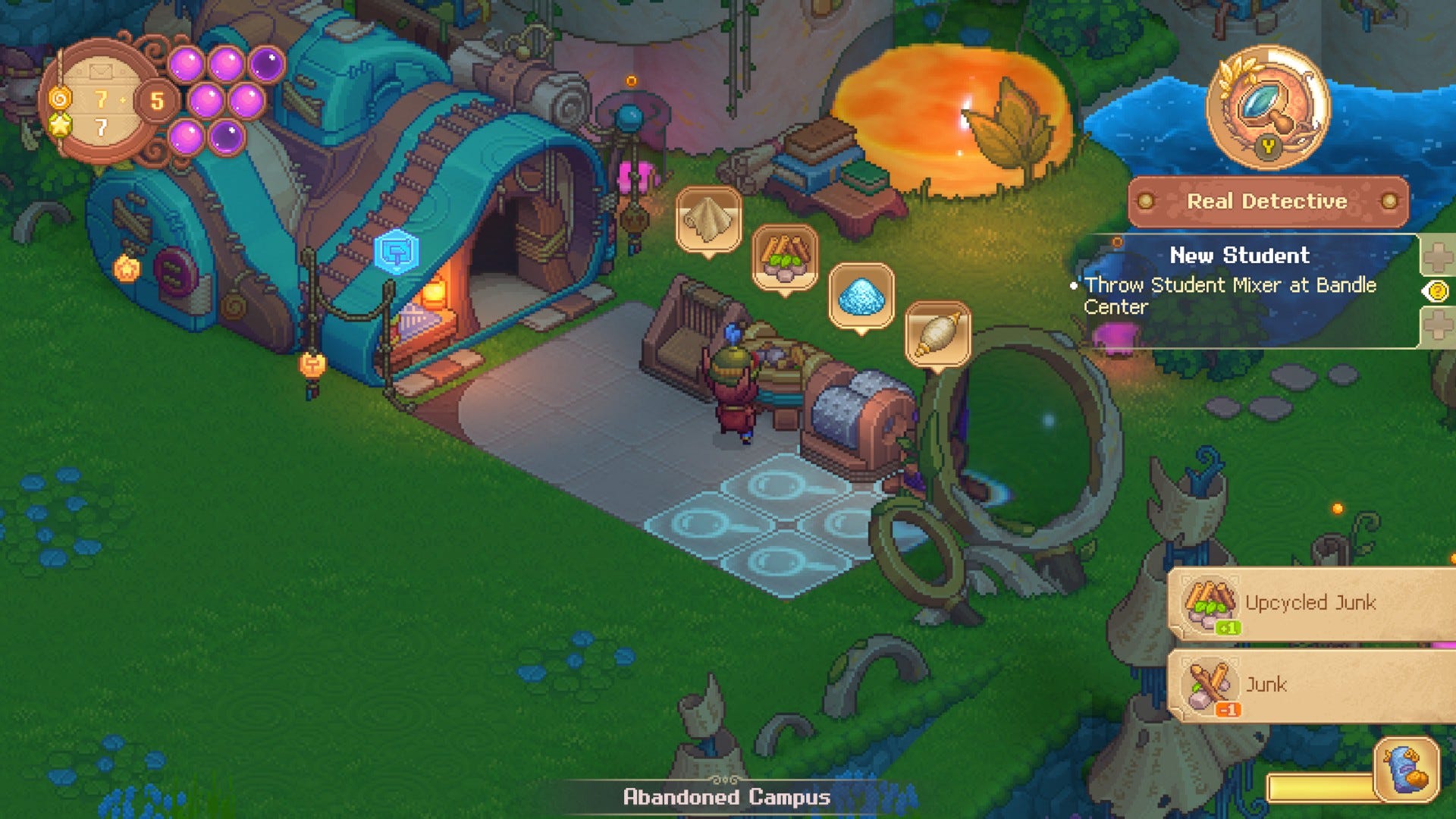
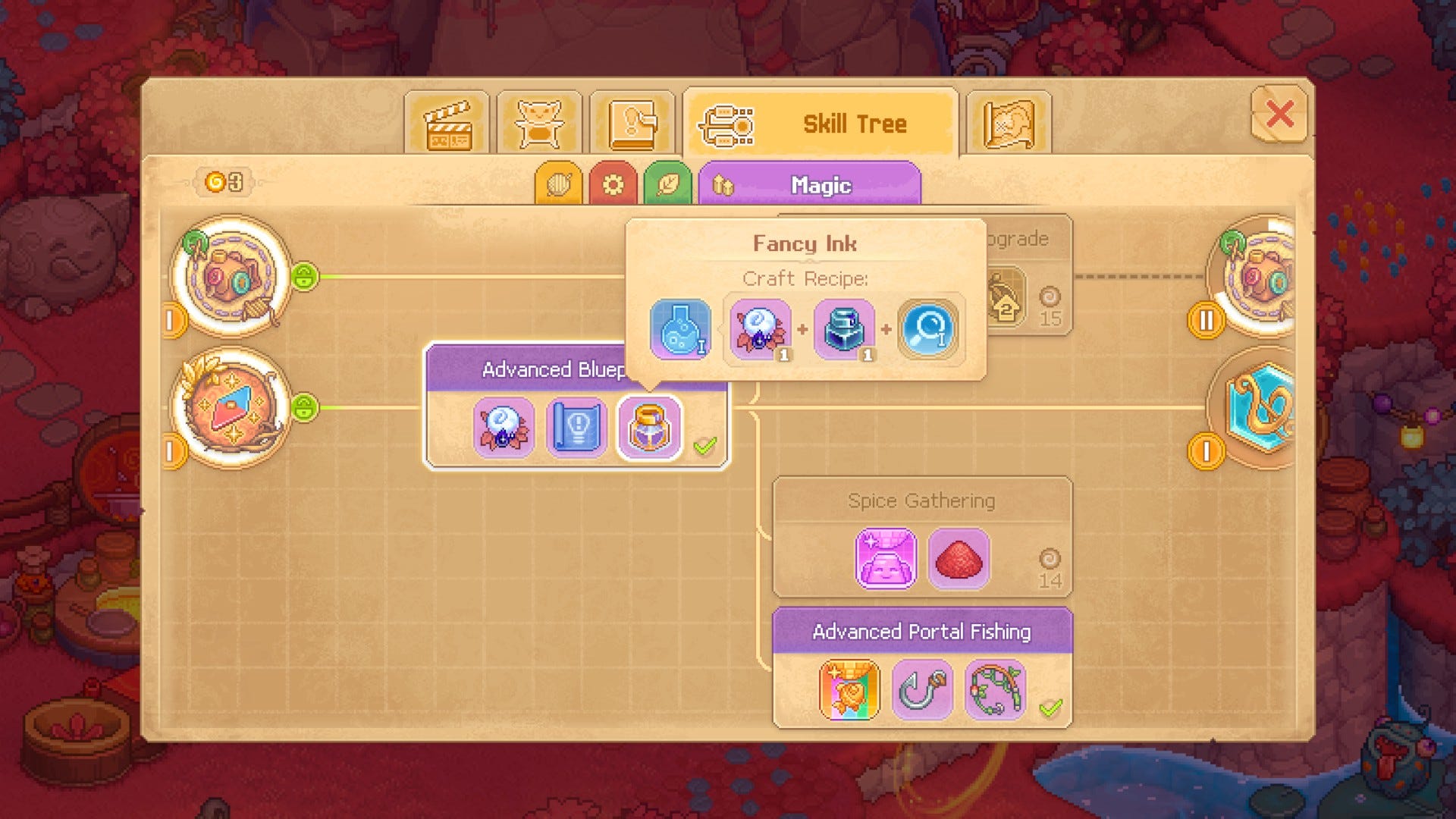
Most quests require some raw material, like beets, or craftable items, like a xylophone. However, your ability to craft or gather them is locked behind levels on seemingly endless skill trees, which require a certain number of inspiration points to unlock. The problem is that gathering and crafting gives so little inspiration after, say, your seventh go at gathering beets. So I usually just slogged away in the kitchen and cooked to earn more inspiration points, since that’s something you’re rarely asked to do outside of running food stands. Since most novel quests require items that are locked behind skill levels, this grinding is awkwardly repeated throughout most of the game.
Excessive grinding isn’t just confined to how you level up, though. Crafting items is a major chore in itself, which is obviously a huge concern for a crafting game, and that’s where the in-game currency, Stars, comes in to extend those eye-rolls. Let’s take clay, as a fairly mundane example. You need five pieces of clay to craft a quest-specific item. To get clay, you need to build a clay pump in specific areas. To activate the clay pump, you need a magic rubber loop. To craft a rubber loop, you need a bouncy ball. And to craft a bouncy ball, you need, um, clay? So what does grinding for Stars mean by organizing food stands and festivals outside of your portable home, all in order to buy one clump from a specific seller.
Sure, all crafting games operate on the same logic. You usually need X amount of Y to make Z, and that process sometimes repeats itself over and over again. But Bandle Tale makes you go through so many checkpoints that you almost forget you needed clay in the first place. And we know from other cozy sims that chores can be fun, too. I mentioned Stardew Valley earlier, and while it’s a hackneyed comparison, it’s a popular cheerleader for the genre for a reason. Stardew Valley wisely makes you work toward long-term goals to automate tasks in a way that Bandle Tale mostly doesn’t: the manual watering of plants in Stardew Valley is eventually replaced by sprinklers, for example. But Bandle Tale makes you go back and forth to gather and craft the same resources over and over again, in a way that can quickly run out of steam.
Skill trees also don’t eliminate boredom; they just prolong it. New skills simply allow you to collect or craft more stuff, rather than changing how you experience or plan for future quests. And since quest goals almost always involve crafting novel stuff, the game can feel like you’re trapped on a hamster wheel as you chase stuff to unlock stuff to do more stuff, and… you get the idea.
There are times, however, when the hamster wheel breaks loose and rolls you somewhere pretty. Discovering a shiny novel cave, opening up a fit hut of a novel friend, or stumbling upon an upside-down waterfall is always thrilling. And that’s doubly true when it comes to the five heavenly islands. Whether it was a more mechanical district or a university where a mini civil war was raging between the faculties of arts and sciences, I always looked forward to dusting off a novel part of the map.
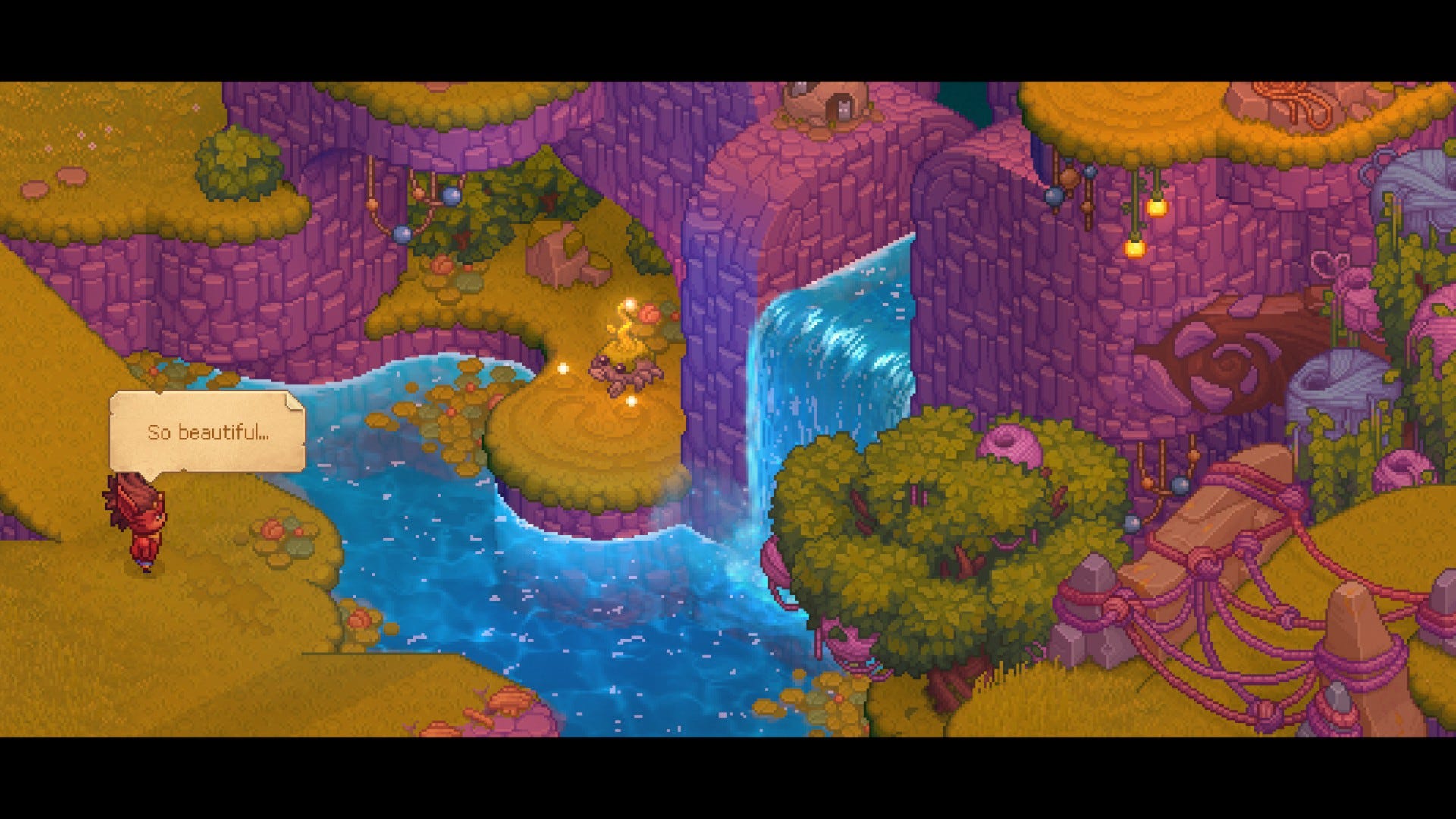
Not to mention how damn good each of the five islands looks, which you can probably figure out for yourself just by looking at screenshots, so let me instead gush over a few of the smaller details. I love the way the islands sometimes bend like the impossible geometry in Monument Valley. I love the way the yordles can cling to the sides of buildings, going about their daily lives or peering through upside-down telescopes. I love the piano bridges that sing a cheerful tune along with your footsteps.
Unfortunately, the good vibes just aren’t enough to save Bandle Tale from being an overwhelming chore. Too often, it hides the fun behind skill levels and layers of crafting that never quite satisfied me, but at least the constant repetition etched pretty pixels onto my eyeballs. That’s a good thing. I guess?
This review is based on a test build of the game provided by publisher Riot Forge.

